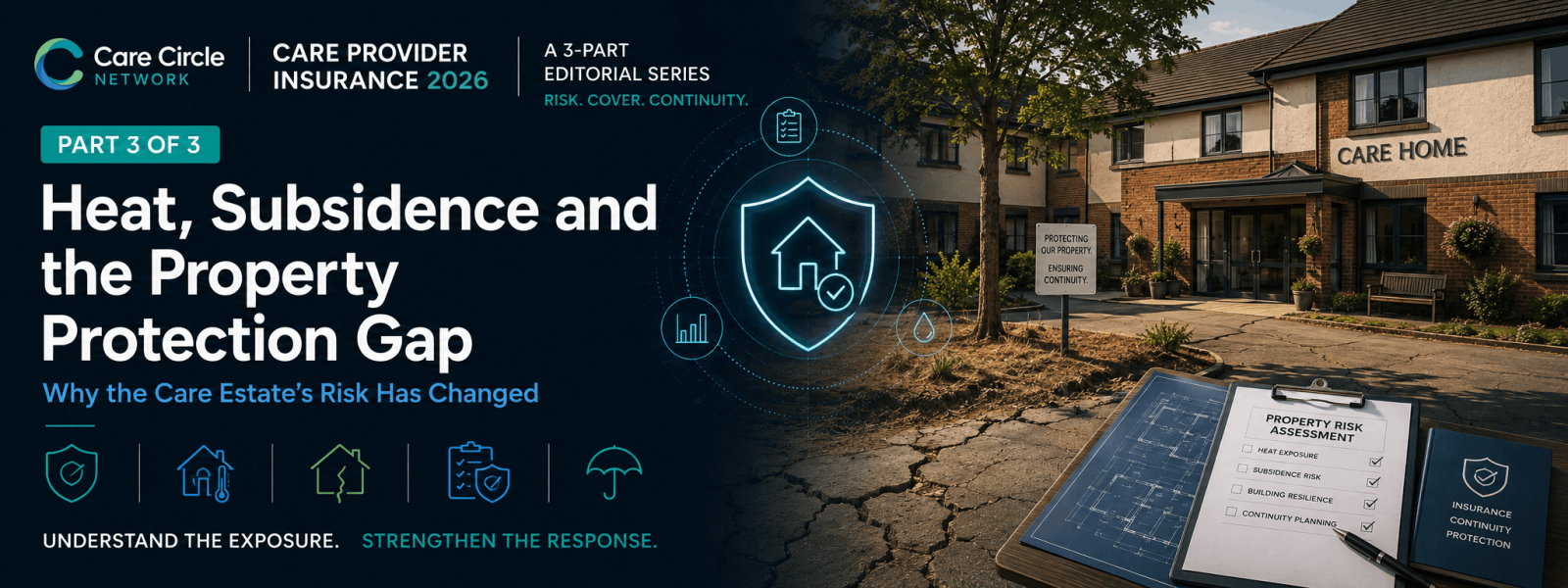
July 2026 delivered a sharp reminder that property risk in the United Kingdom is changing.
Provisional Met Office figures described a prolonged heatwave, exceptionally low rainfall and widespread drought conditions. England and Wales were on course to record their driest July in 190 years, with several English counties receiving less than one millimetre of rain during almost the entire month.
The heat itself was equally notable.
By 10 July, the United Kingdom had recorded temperatures of at least 35°C during May, June and July of the same year for the first time in the national weather record. The Met Office also warned that hot, dry and windy conditions were creating extreme wildfire conditions across parts of England and Wales.
Against that backdrop, new Association of British Insurers figures showed that home insurers paid £72 million for domestic subsidence claims during the second quarter of 2026. The average claim reached a record £20,000—more than £2,000 above the corresponding period a year earlier.
The average claim for domestic damage caused by flooding, storms and burst pipes also reached £8,548 during the quarter.
Those figures relate to domestic insurance claims, not commercial care-home losses.
They should not be used to estimate the claim a care provider might experience or infer how a commercial policy would respond.
But they provide an important market signal.
Ground movement is becoming more costly.
Weather-related property losses remain significant.
And the financial consequence of repairing a building is only one part of the risk facing a care provider.
When a private home is seriously damaged, the occupants may need somewhere else to live.
When a care home is seriously damaged, the provider may need to relocate people with complex needs, maintain medicines and records, secure specialist equipment, support staff, communicate with families and commissioners and satisfy regulatory requirements before the service can operate normally again.
For a care provider, property damage is never only a property claim. It can become a complete care-continuity event.
The Building May Look the Same While the Risk Around It Changes
A care property may appear materially unchanged from one renewal to the next.
The exterior remains familiar.
The number of registered beds may be similar.
The same activities may still be listed on the statement of purpose.
But the cost and complexity of recovering the service may have moved significantly.
Several things can change without altering the building’s outward appearance:
- construction and labour costs;
- professional fees;
- the value of specialist contents and equipment;
- building-regulation requirements;
- care technology;
- dependency levels;
- staffing arrangements;
- supply-chain times;
- energy and utility infrastructure;
- and the period required to return the regulated service to normal operation.
The wider physical environment is also changing.
The latest British Geological Survey research combines geotechnical information with projected temperature and rainfall patterns. It concludes that hotter, drier summers are expected to increase susceptibility to shrink–swell ground movement in parts of Great Britain, particularly where buildings sit on clay-rich soils. BGS stresses that these are projections, but identifies potential financial consequences for owners, insurers and managers of property and infrastructure.
The Met Office’s latest State of the UK Climate assessment reaches a similarly clear conclusion about the wider direction of travel. The decade from 2016 to 2025 was 1.33°C warmer than 1961–1990, while temperature extremes have become more frequent and intense. In parts of the South East, the average hottest day of the year has warmed by more than 4.5°C.
This does not mean every care home will suffer climate-related structural damage.
Nor does it mean every crack, repair or period of hot weather creates an insurance event.
It means historic experience alone may no longer be enough to describe future property exposure.
Why Hot, Dry Weather Can Increase Subsidence Risk
Subsidence occurs when the ground beneath a building moves downwards and affects its foundations.
One important UK cause is shrink–swell behaviour in clay-rich soil.
Clay absorbs moisture and expands when wet. During prolonged dry conditions it loses moisture and contracts. That ground movement can affect buildings above it, particularly where the movement is uneven.
The British Geological Survey explains that swelling can lift structures, while shrinkage can create settlement or subsidence. Risk is influenced by the local geology, foundations, drainage, vegetation and changes in soil moisture.
Trees and large shrubs can be relevant because their roots draw water from the ground.
But the answer is not indiscriminate tree removal.
Removing established vegetation without suitable advice can itself alter ground moisture and potentially create different movement. BGS recommends specialist input where shrink–swell risk may affect a property or where major building work and tree management are being considered.
Drainage is also important.
Leaking pipes and drains can soften or wash away ground and may contribute to movement depending on local soil conditions. Property risk therefore needs to be understood through the relationship between:
- geology;
- foundations;
- drainage;
- trees;
- maintenance;
- and recent weather.
A visible crack does not prove subsidence.
Buildings develop cracks for many reasons, including thermal movement, ordinary settlement, materials drying and previous alterations.
The provider needs evidence rather than assumption.
That is where building surveyors, structural engineers, geotechnical specialists, facilities teams and insurers may all become involved—but the exact route depends on the circumstances and relevant contracts.
Subsidence in a Care Home Is an Operational Problem Before It Becomes a Financial One
Structural movement can affect much more than walls.
In a care environment, even relatively localised damage may interfere with:
- fire doors;
- compartmentation;
- windows;
- internal doors;
- accessible routes;
- floor levels;
- lifts;
- drainage;
- pipework;
- bathrooms;
- mobility equipment;
- and safe evacuation.
A door that begins sticking may be an inconvenience in an ordinary office.
In a care home, it may affect:
- wheelchair movement;
- privacy;
- infection control;
- fire safety;
- or access to somebody’s bedroom.
A cracked floor or changing threshold may increase falls risk.
A room may remain physically present but cease to be safely admittable.
A damaged lift can affect the provider’s ability to support people on upper floors even where the remainder of the building appears usable.
CQC’s premises and equipment regulation requires premises used for regulated activities to be clean, secure, suitable, properly used and adequately maintained. Alterations and equipment used to deliver care must comply with relevant law and guidance.
The provider therefore needs to assess two questions separately:
- Can the building be repaired?
- Can care continue safely while the repair is investigated and completed?
The first is primarily a property question.
The second involves care planning, staffing, regulation and continuity.
Heat Is a Care-Delivery Risk Even When No Building Damage Occurs
Extreme heat can affect a care service without creating obvious insured physical damage.
Indoor temperatures may become difficult to manage.
Cooling equipment may be insufficient or fail under sustained demand.
Medicines, food, clinical products and digital equipment may require temperature control.
Water use may increase.
Employees may experience fatigue or heat stress.
People receiving care may be particularly vulnerable because of:
- age;
- frailty;
- dementia;
- mobility;
- medication;
- cardiovascular or respiratory conditions;
- and reduced ability to regulate or communicate discomfort.
UKHSA’s Heat-Health Alert guidance is directed specifically at managers in hospitals, care homes, other residential settings and organisations delivering care in people’s homes. It expects providers to prepare before summer and respond according to alert level while applying professional judgement to individual needs.
This creates an important insurance boundary.
A provider may experience significant additional operating pressure during heat without suffering an event that falls within a property policy.
Additional staffing, portable cooling, water use, altered routines or temporary changes to rooms do not automatically become insured losses merely because they arose during hot weather.
The position depends on the event and policy wording.
Heat resilience therefore needs its own operational plan rather than being treated solely as an insurance question.
The provider should understand:
- which rooms overheat first;
- which people are most vulnerable;
- how temperatures are monitored;
- what happens if ventilation or cooling fails;
- whether temporary equipment affects electrical demand;
- and how safe care will be maintained during prolonged heat.
Insurance and preparedness solve different parts of the problem.
Wildfire Risk Is No Longer Only an Overseas Story
Wildfire remains considerably less common in the UK than in some hotter regions, but the 2026 summer demonstrated why it cannot be dismissed as irrelevant.
During July, the Met Office reported extreme wildfire conditions across substantial parts of England and Wales as heat, dry vegetation and wind combined. Fire services in Suffolk attended numerous incidents involving crops, grassland, hedges, sheds and other outdoor areas. One significant field fire near Clare affected approximately 100 acres of standing crop and stubble.
A care provider does not need to be directly struck by fire to experience disruption.
A nearby wildfire or large outdoor fire may create:
- smoke;
- poor air quality;
- road closures;
- restricted emergency access;
- power interruption;
- staff-travel difficulties;
- and concern among residents and families.
Suffolk Fire and Rescue Service advised people near one July incident to keep doors and windows closed because of smoke, illustrating how an external event can immediately affect the operating environment of nearby premises.
Again, the insurance implications are policy-specific.
The more immediate provider question is whether the business-continuity plan considers:
- external fire;
- smoke;
- evacuation routes;
- loss of access;
- utility interruption;
- and the availability of transport suitable for the people being supported.
The hazard may begin outside the boundary.
The continuity problem quickly moves inside it.
The Property Protection Gap Begins With Valuation
Commercial property insurance is generally concerned with the cost of repairing or rebuilding insured premises and, depending on the arrangement, replacing insured contents or equipment.
The ABI makes an essential distinction: commercial premises should be valued according to the cost of rebuilding, not their sale price or current market value.
These figures can be very different.
A care home may have a high market value because of:
- location;
- planning use;
- trading potential;
- land;
- occupancy;
- and business goodwill.
Another may have a relatively modest market value but a high reinstatement cost because it includes:
- specialist construction;
- complex mechanical and electrical systems;
- lifts;
- fire-safety infrastructure;
- accessibility features;
- commercial kitchens;
- laundry facilities;
- nurse-call systems;
- and extensive external works.
The reinstatement assessment may also need to consider matters such as:
- demolition and debris removal;
- professional fees;
- local construction costs;
- access constraints;
- and rebuilding a comparable structure to current requirements.
BCIS’s commercial reinstatement tools use building-cost data to assess the likely cost of reinstating commercial properties, including demolition, professional fees and external works. BCIS has continued to highlight accurate reinstatement valuation as a central issue for managing underinsurance in 2026.
A valuation carried forward through annual indexation may remain appropriate in some circumstances.
But indexation cannot always capture a material change in the property itself.
The provider may need to recognise when the estate has altered through:
- extensions;
- refurbishment;
- added bedrooms;
- repurposed areas;
- major equipment;
- solar or energy systems;
- new outbuildings;
- landscaping;
- or changes to the building’s construction and use.
Care Circle Network cannot determine the correct declared value or recommend a valuation method for an individual organisation.
It can highlight why the figure should have an identifiable, current basis rather than being inherited indefinitely from an old schedule.
Underinsurance Is Not Simply a Smaller Claim Limit
The ABI defines underinsurance as a situation in which the insurance cover or sum insured is lower than the value at risk.
The commercial consequences can be more complicated than reaching a limit after a total loss.
Policy wordings differ, and potential remedies or claim calculations cannot be generalised safely.
But providers should understand the underlying exposure.
If the organisation believes it could rebuild for £5 million and the realistic cost is materially higher, the financial protection may not match the event the provider is planning to survive.
The same issue can affect contents and equipment.
A care estate may contain substantial value within:
- specialist beds;
- pressure-relief equipment;
- hoists;
- slings;
- wheelchairs;
- nurse-call systems;
- fire equipment;
- telecare;
- computers and mobile devices;
- commercial kitchens;
- laundry equipment;
- generators;
- heating systems;
- and furnishings.
The purchase price recorded several years earlier may not represent the current cost, lead time or basis on which damaged equipment would be replaced.
The protection gap is therefore not only about the bricks and mortar.
It is the difference between the service the organisation believes it can restore and the resources actually available to restore it.
Repairing the Building Is Not the Same as Restoring the Care Service
This is the most important distinction for adult social care.
A contractor may complete the physical repair.
The service may still be unable to return to normal.
The provider may need to:
- inspect the building;
- test utilities and systems;
- recommission equipment;
- rebuild records and room inventories;
- re-establish staffing;
- communicate with commissioners;
- review care plans;
- reassure people and families;
- and demonstrate that the premises remain suitable for regulated activity.
CQC describes a business-continuity plan as showing how a care home will continue operating during and after disruption. Its registration guidance specifically identifies utility failure—such as loss of gas, water or electricity—as a risk such plans should address.
This means the provider’s recovery timeline may include four separate stages:
Physical reinstatement
When is the damage repaired?
Operational recommissioning
When are systems, utilities, equipment and staff ready?
Regulatory and professional assurance
When can the provider demonstrate that the environment is safe and suitable?
Human return
When is it genuinely appropriate for people to return, taking account of their needs and the disruption they have experienced?
A building can be technically habitable before the care service is fully restored.
That gap is central to business-interruption planning.
Business Interruption Needs to Be Understood Through the Care Model
The ABI describes business-interruption insurance generally as protection against loss of income during periods when a business cannot operate normally following an insured event. It may also address specified additional operating costs, depending on the policy.
For a care provider, interruption may not look like a complete closure.
The service may continue in a reduced or altered form.
Examples could include:
- part of a home becoming unavailable;
- admissions being suspended;
- people being temporarily relocated;
- additional transport;
- employees working across alternative premises;
- more agency staffing;
- hired equipment;
- temporary kitchens or laundry;
- remote management space;
- and additional professional or regulatory work.
Income may also behave differently from ordinary retail or office businesses.
A provider may retain some fees temporarily.
A commissioner may move funding with the person.
A self-funded resident may leave permanently.
An expected admission may not proceed.
Occupancy may take time to rebuild even after the building is physically ready.
This is why the interruption model needs to reflect the actual care operation.
The provider should understand how a serious event would affect:
- existing fees;
- new admissions;
- staffing;
- variable costs;
- fixed property costs;
- and the route back to sustainable occupancy.
The purpose is not to calculate a policy limit through editorial coverage.
It is to expose the operational assumptions that an appropriately authorised intermediary, insurer and professional advisers may need to understand.
The Recovery Period May Be Longer Than the Construction Period
An indemnity period is often understood as the time required to repair or rebuild.
For a care provider, the relevant operational recovery may extend beyond construction.
Imagine a home suffers substantial fire, flood or structural damage.
Even after building work is complete, the provider may need time to:
- recruit or reassemble the workforce;
- restore commissioning confidence;
- arrange inspections;
- rebuild occupancy;
- relocate equipment;
- update registration information where necessary;
- and support people who may be reluctant or unable to return.
The service may reopen at reduced occupancy and remain below its former income level for a period.
A home rebuilt in 18 months does not necessarily return to its pre-loss financial position in month 18.
Equally, some costs may reduce during closure, while others continue or increase.
The appropriate period and policy structure are policy-specific matters.
The editorial lesson is that recovery should be defined according to restoration of the care business, not only completion of the building.
Alternative Premises Are Not Automatically Suitable Premises
A business-continuity plan may identify alternative accommodation.
In adult social care, availability alone is not enough.
The alternative setting may need to support:
- accessibility;
- personal care;
- moving and handling;
- medicines;
- food and hydration;
- infection prevention;
- safeguarding;
- privacy;
- overnight staffing;
- and specialist behaviour or clinical needs.
A hotel, unused wing or neighbouring service may appear physically available while remaining unsuitable for some or all of the people affected.
The provider should also consider the emotional impact of relocation.
For a person living with dementia, autism or significant communication needs, moving unexpectedly can create substantial distress and clinical risk.
Temporary relocation may require:
- familiar staff;
- personal possessions;
- transport;
- adapted rooms;
- additional support;
- and careful family communication.
Whether particular costs fall within an insurance arrangement depends on the wording and circumstances.
The continuity plan still needs to function where some costs are uninsured, disputed or subject to limits.
Utilities Can Be as Critical as the Structure
A care home may remain physically undamaged but become temporarily unusable because of loss of:
- electricity;
- water;
- gas;
- drainage;
- communications;
- heating;
- or cooling.
Hot weather can place additional strain on:
- water demand;
- refrigeration;
- ventilation;
- electrical systems;
- and portable cooling equipment.
Wildfire or storm events can affect local infrastructure and access.
Ground movement can damage underground pipes and drainage.
CQC expects care-home continuity planning to address utility failures because the service cannot rely on ordinary building use when essential infrastructure is unavailable.
The provider should understand which utilities are:
- care-critical;
- supported by backup arrangements;
- dependent on external suppliers;
- and capable of being restored within the time people can remain safely in the building.
Property resilience therefore extends beneath and beyond the building envelope.
Insurance Is Not a Maintenance Contract
Commercial property policies generally address specified unexpected events.
They do not replace ordinary responsibility for:
- wear and tear;
- ageing;
- maintenance;
- defective work;
- gradual deterioration;
- and routine repair.
The ABI’s commercial property guidance explains that general wear and tear and age-related damage are not normally covered, while damage caused by poor contractor work may also sit outside ordinary property cover. Policy exclusions vary.
This boundary matters in climate-related property discussions.
A provider should not assume that every crack appearing after hot weather is insured subsidence.
Nor should it assume that failing drainage, deteriorated roofing or an overloaded cooling system becomes an insurance matter simply because extreme weather exposed the weakness.
Insurance and maintenance should support one another.
Maintenance may reduce the likelihood or severity of loss.
Insurance may respond to defined events that remain despite reasonable controls.
Neither replaces the other.
The Property Claim Begins With the Records Held Before the Damage
A serious property claim may require more than photographs taken after the event.
The provider may need evidence about what existed beforehand.
That can include:
- plans;
- surveys;
- reinstatement assessments;
- maintenance records;
- inspection certificates;
- equipment inventories;
- photographs;
- purchase invoices;
- contracts;
- occupancy;
- room use;
- and previous alterations.
This evidence helps explain:
- the pre-loss condition;
- ownership;
- value;
- maintenance history;
- and operational impact.
It may also support the provider in distinguishing:
- insured damage;
- pre-existing deterioration;
- improvement work;
- and ordinary maintenance.
The relevant evidence depends on the event and policy.
But a provider relying on one paper asset list stored inside the affected building may discover that the first casualty of the incident is its ability to prove what it lost.
Property records should therefore form part of information resilience as well as insurance administration.
Early Signs Should Be Recorded Without Jumping to Conclusions
When new cracking, sticking doors or unusual movement appears, the provider needs a controlled response.
The first step is not to diagnose subsidence internally.
Nor should employees begin repairs that remove evidence before the position has been assessed.
A proportionate property record can include:
- dated photographs;
- location;
- dimensions;
- whether the issue is changing;
- nearby drainage or vegetation;
- relevant recent work;
- and any effect on safe use.
BGS advises owners and managers to seek specialist advice where active shrink–swell movement may be affecting a property.
The provider should then follow the relevant internal, landlord, insurer and professional routes according to its circumstances.
A leased service may have different responsibilities from an owner-occupied building.
A crack may require routine maintenance, urgent engineering assessment or monitoring.
The evidence should guide the response.
Leased Care Premises Create an Additional Layer of Risk
Many providers do not own the buildings from which they operate.
The landlord may arrange buildings insurance.
The provider may insure:
- contents;
- equipment;
- liabilities;
- and interruption exposure.
This can create gaps in understanding.
The lease may allocate responsibilities for:
- structure;
- internal repair;
- machinery;
- fixed equipment;
- rent during damage;
- reinstatement;
- and access to insurance proceeds.
The landlord’s property policy and the provider’s business-interruption arrangements may not align automatically.
The provider may depend on a repair process it does not control while continuing to carry:
- workforce;
- contractual;
- regulatory;
- and care-continuity responsibilities.
This is not a reason to assume a particular insurance solution.
It is a reason for leaders to understand the relationship between:
- lease;
- landlord cover;
- provider cover;
- and continuity plans.
The service should not discover after a major event that each party believed the other was responsible for the same recovery activity.
Property Change Should Trigger Insurance and Continuity Review
Care buildings evolve continually.
A provider may add:
- bedrooms;
- ensuite facilities;
- garden structures;
- lifts;
- solar panels;
- battery systems;
- specialist baths;
- air-conditioning;
- security;
- EV chargers;
- generators;
- or digital monitoring.
Each improvement may strengthen care.
It may also alter:
- reinstatement value;
- fire or electrical risk;
- maintenance requirements;
- asset value;
- and recovery dependencies.
The change should therefore connect three processes:
- Property and regulatory approval
- Insurance and valuation review
- Business-continuity update
Treating them separately increases the risk that the service has invested in a valuable asset which is absent from records, unsupported by maintenance or overlooked in the recovery plan.
The Board Needs a Property-Risk View, Not Only a Premium Figure
Insurance is often reported to boards as an annual premium movement.
Property resilience needs a broader view.
Owners, directors, trustees and nominated individuals should understand:
- which buildings carry the greatest structural or climate exposure;
- when reinstatement values were last assessed;
- where maintenance backlogs exist;
- which rooms or services are operationally vulnerable;
- how long each location could function without critical utilities;
- whether continuity arrangements are realistic;
- and what recovery assumptions sit behind the insurance programme.
The question is not simply:
Are the buildings insured?
It is:
What event could stop care at this location, and how would the organisation maintain continuity while the property and service recover?
That is a Well-led and business-resilience question as much as an insurance question.
A Practical Care-Estate Protection Review
A useful review begins by mapping the complete estate.
For each care home, supported-living property and operational site, leaders should understand:
- ownership or lease structure;
- construction;
- age;
- condition;
- occupancy;
- key equipment;
- utilities;
- local hazards;
- and critical dependencies.
The next stage is to test the values.
The provider should identify where each declared building and asset figure came from, when it was established and what material change has occurred since.
The review should then move into continuity.
Choose one significant scenario—subsidence affecting several rooms, fire damage, prolonged power loss or external wildfire restricting access—and follow the effect through:
- people;
- staffing;
- transport;
- medicines;
- records;
- commissioners;
- property repair;
- and return to service.
Finally, compare the operational scenario with the relevant contracts and policy information through appropriately authorised or qualified advisers.
The output should not be a generic statement that the organisation is “fully covered.”
It should be a clearer understanding of:
- what the organisation could lose;
- what it would need to keep care operating;
- what protection may be available;
- and which responsibilities remain with the provider.
What Should Providers Expect From Property and Insurance Partners?
The changing risk creates a legitimate role for:
- FCA-authorised commercial insurance intermediaries;
- insurers;
- chartered surveyors;
- reinstatement-cost assessors;
- structural and geotechnical engineers;
- facilities-management specialists;
- fire and climate-risk consultants;
- loss adjusters;
- continuity advisers;
- and temporary-accommodation partners.
The strongest support will connect specialist property knowledge with care-sector reality.
A surveyor assessing a care home needs to recognise that the building contains more than rooms and square metres.
A continuity adviser needs to understand that relocation cannot be planned like ordinary office recovery.
An insurance intermediary needs accurate evidence about:
- property;
- occupancy;
- equipment;
- activities;
- and recovery assumptions.
The provider should expect each partner to define clearly:
- what they are assessing;
- what they are not assessing;
- which evidence they require;
- and what decision their work is intended to support.
Ten Questions Care Leaders Should Be Able to Answer
- When was each building’s reinstatement cost last assessed, and what has changed since?
- Are declared values based on rebuilding the premises rather than market value?
- Which specialist contents and fixed equipment would be expensive or slow to replace?
- Is any current cracking, drainage issue or movement being monitored appropriately?
- Which services sit in areas with known shrink–swell, flood or wildfire exposure?
- How would prolonged heat affect residents, employees, equipment and utilities?
- Where could people be relocated, and is that setting genuinely suitable for their needs?
- How long would it take to restore the care service—not merely repair the building?
- Which property conditions, maintenance duties and notification requirements require operational evidence?
- Which part of the recovery plan depends on an assumption nobody has tested?
The final question often reveals the true protection gap.
The Care Estate’s Risk Has Changed
The current insurance discussion has been prompted by striking subsidence figures.
A record average domestic claim of £20,000 deserves attention.
But the deeper issue is not one quarter’s claims data.
It is the changing relationship between:
- climate;
- buildings;
- care complexity;
- recovery costs;
- and continuity.
The United Kingdom is experiencing more frequent and intense temperature extremes.
July 2026 combined sustained heat with exceptionally low rainfall and widespread drought.
BGS research indicates that shrink–swell susceptibility is expected to increase in parts of Great Britain as hotter and drier summers become more common.
For care providers, the response cannot begin and end with insurance.
It requires:
- property intelligence;
- maintenance;
- heat preparedness;
- suitable valuations;
- asset records;
- supplier resilience;
- realistic relocation;
- and tested business continuity.
Insurance may transfer part of the financial consequence of defined events.
It does not prevent overheating.
It does not maintain drains.
It does not move residents safely.
It does not select suitable temporary premises.
And it cannot correct an inaccurate understanding of what the service would cost to rebuild and restore.
That is why the protection gap needs to be understood in operational terms.
The care home may look the same as it did at the previous renewal.
The weather around it has changed.
The cost of rebuilding it may have changed.
The equipment inside it may have changed.
The people it supports may have more complex needs.
And the path back to normal care may now be longer than anyone previously assumed.
Understand the exposure.
Strengthen the response.
Protect the continuity of care.
Frequently Asked Questions
Why has UK subsidence risk received attention in August 2026?
ABI figures showed that home insurers paid £72 million for domestic subsidence claims during the second quarter of 2026, with the average claim reaching a record £20,000. These are domestic figures and do not represent commercial care-home claims.
Does hot weather directly cause all subsidence?
No. Subsidence has several possible causes. Prolonged dry weather can contribute to shrinkage of clay-rich soils, while trees, foundations, drainage, mining and other ground conditions may also be relevant.
Is a commercial property’s rebuild cost the same as its market value?
No. The ABI states that business premises should be insured according to rebuilding cost rather than sale price or current market value.
What can be included in a reinstatement-cost assessment?
Professional tools may consider the cost of reconstructing the building together with relevant demolition, professional fees and external works. The appropriate assessment depends on the individual property.
Does commercial property insurance cover every building problem?
No. Policies vary, and ordinary wear and tear, ageing and poor contractor work are commonly outside standard property cover. The relevant wording and circumstances determine the position.
What is business-interruption insurance?
The ABI describes it generally as insurance addressing loss of income during periods when a business cannot operate normally following an unexpected insured event. It may also address specified increased operating costs. Actual triggers, limits and conditions vary.
Why may a care provider need longer to recover than it takes to repair the building?
Physical repair may be followed by recommissioning equipment, rebuilding staffing and occupancy, communicating with commissioners and demonstrating that the premises are suitable for regulated care.
Are care providers expected to plan for property and utility disruption?
CQC expects care-home business-continuity plans to show how the service will continue during and after disruption, including failure of essential utilities.
Does Care Circle Network recommend a particular insurance policy or limit?
No. This feature provides general editorial information. Appropriate cover, values, indemnity periods and policy terms depend on the provider’s circumstances and should be considered with an appropriately authorised insurance intermediary, insurer or relevant professional adviser.
Editorial note
This feature provides general information about property risk, business continuity and commercial insurance concepts. It does not constitute insurance, legal, surveying, engineering or financial advice, a personal recommendation, or an assessment of any organisation’s insurance requirements.
Insurance cover, exclusions, sums insured, conditions, indemnity periods and claims outcomes vary. Providers should obtain policy-specific information from an appropriately authorised insurance intermediary, insurer or relevant qualified professional.
Editorial sources
This feature has been developed using information available by 6 August 2026.
- Association of British Insurers, Average Claim for Subsidence Reaches Record £20,000 Amidst Hot Weather, published 3 August 2026.
- Met Office, An Early Look at the July Statistics: Just How Dry Has It Been?, published 31 July 2026.
- Met Office, State of the UK Climate 2025, published July 2026.
- Met Office, Heatwave Continues as UK Records Unprecedented Run of 35°C Days, published 10 July 2026.
- British Geological Survey, Latest Research Emphasises Climate-Related Subsidence Risk to Millions of British Properties, published 11 June 2026.
- British Geological Survey, Shrinking and Swelling Soils.
- Association of British Insurers, Commercial Property Insurance.
- Building Cost Information Service, Commercial Reinstatement Tool and 2026 reinstatement-cost guidance.
- UK Health Security Agency, Heat-Health Alert Action Card for Health and Social Care Providers, updated 21 May 2026.
- Care Quality Commission, Regulation 15: Premises and Equipment and business-continuity guidance.