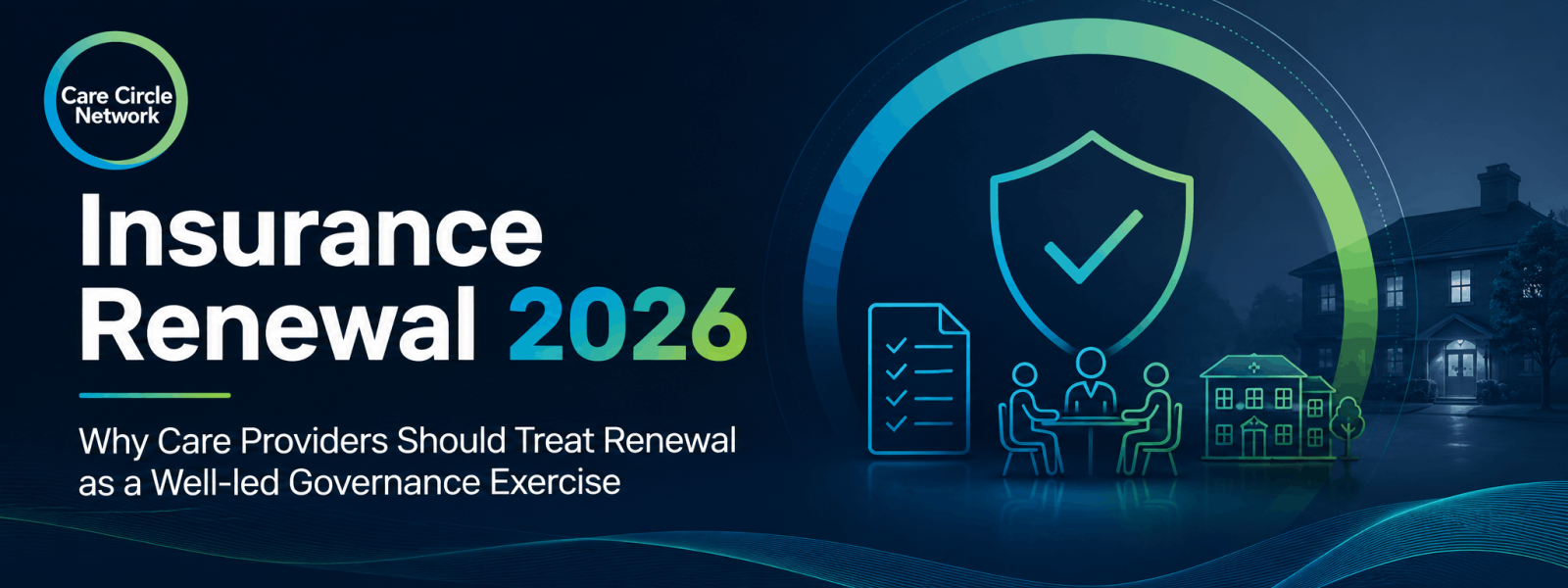
For many adult social care providers, insurance renewal in 2026 is no longer a routine annual exercise. It is becoming a strategic test of governance, financial resilience, and operational readiness.
Rising operating costs, rebuild valuation pressures, agency workforce arrangements, cyber exposure, and business interruption planning now sit much closer to the boardroom. For providers currently in or approaching their renewal review windows in 2026, the process offers a valuable opportunity to show that risk is being actively understood, reviewed, and managed.
This matters because insurance renewal does not sit separately from CQC expectations. Under the Single Assessment Framework, the Well-led domain places clear emphasis on governance, accountability, learning, sustainability, and leadership oversight. A structured renewal review can therefore become more than a policy exercise — it can create practical evidence of good governance in action.
1. Governance, Management, and Sustainability: Demonstrating Integrated Oversight
CQC looks for leaders who maintain strong, integrated governance across quality, finance, and operations, with clear accountability and effective risk management.
From an insurance perspective, reviewing coverage in detail — especially for rebuild costs and emerging risks — demonstrates proactive stewardship of the organisation’s sustainability. This helps protect against potential disruptions and supports reliable, ongoing service delivery.
Rebuild Costs in 2026: Reinstatement and rebuild valuations remain under pressure from materials, labour, and enhanced regulatory requirements. Older sums insured may no longer reflect the real cost of recovery in a major incident. Independent professional assessments, tailored to care-specific features such as fire safety, accessibility, and infection control, help ensure sums insured align with current needs. Many providers also review business interruption provisions to reflect realistic recovery timelines in a regulated environment.
Leadership Step: Bring valuation findings and actions to board level. This creates a clear record of strategic oversight.
2. Learning, Improvement, and Innovation: Supporting a Culture of Development
Well-led evaluations value organisations that draw on data, incidents, and external insights to drive ongoing improvement.
The renewal process gives providers a practical opportunity to demonstrate how risk is being identified, reviewed, and managed. Documenting identified areas for development and the resulting actions provides tangible examples of responsiveness and continuous enhancement that align with CQC expectations.
Leaders who engage fully with this process often uncover opportunities to refine operations and build stronger foundations.
3. Financial Resilience: Underpinning Quality and Stability
With the National Living Wage at £12.71 per hour from April 2026 and continued operating cost pressures, CQC pays close attention to how providers maintain financial stability to deliver consistent care.
A Good or Outstanding CQC rating can support how an organisation is viewed from a risk perspective, particularly when combined with clear evidence of governance, controls, and improvement activity. At the same time, securing appropriate cover through a professional, evidence-based renewal demonstrates sound financial management and helps manage long-term costs effectively. This contributes to overall organisational resilience.
4. Digital Governance and Cyber Resilience: Leadership in a Technology-Enabled Environment
As digital records, rostering, and technology-enabled care become more central, board-level oversight of cyber matters forms part of effective governance.
Providers that can show structured controls — including board oversight, multi-factor authentication, tested backups, staff training, incident response plans, and supplier assurance — are often better placed during renewal discussions. These measures reduce operational exposure while strengthening evidence for CQC Safe and Well-led domains.
Agency Staffing Arrangements: Clear due diligence, induction, supervision, and monitoring processes for agency colleagues support consistent care quality and help manage associated liabilities. Many providers are refining these areas as part of broader workforce and risk strategies.
Strategic Renewal Checklist: Practical Steps Forward
Engage Early with Specialists — Work with a care-sector experienced broker to prepare a comprehensive submission that reflects your governance strengths.
Board-Level Review — Treat the renewal as a governance exercise, with clear documentation of decisions and actions.
Align Key Areas — Update rebuild valuations, refine agency protocols, strengthen cyber measures, and ensure business interruption cover is fit for purpose.
Record Insights — Capture analyses, improvements, and outcomes for your quality assurance systems and CQC evidence portfolio.
Market Engagement — Use your prepared risk profile to explore options and secure sustainable terms.
Connect to Wider Goals — Link renewal activities to Well-led priorities around governance, sustainability, and digital leadership.
What Providers Should Do Now
For providers approaching renewal windows in 2026, the most valuable step is to begin the review before the deadline becomes urgent. A stronger submission, clearer evidence of controls, and better-prepared risk information can lead to more constructive renewal conversations, more sustainable terms, and clearer evidence that leadership is actively managing organisational risk.
Care Circle Network will continue to support providers with sector-focused insight, practical guidance, and access to relevant specialist expertise as renewal, governance, and resilience pressures continue to evolve. Renewal review can become a catalyst for greater resilience and excellence in care delivery.
Important note: This article provides general information for discussion purposes only. It is not regulated insurance or legal advice. Providers should consult a qualified, FCA-authorised insurance broker specialising in adult social care for advice tailored to their specific policies and circumstances.